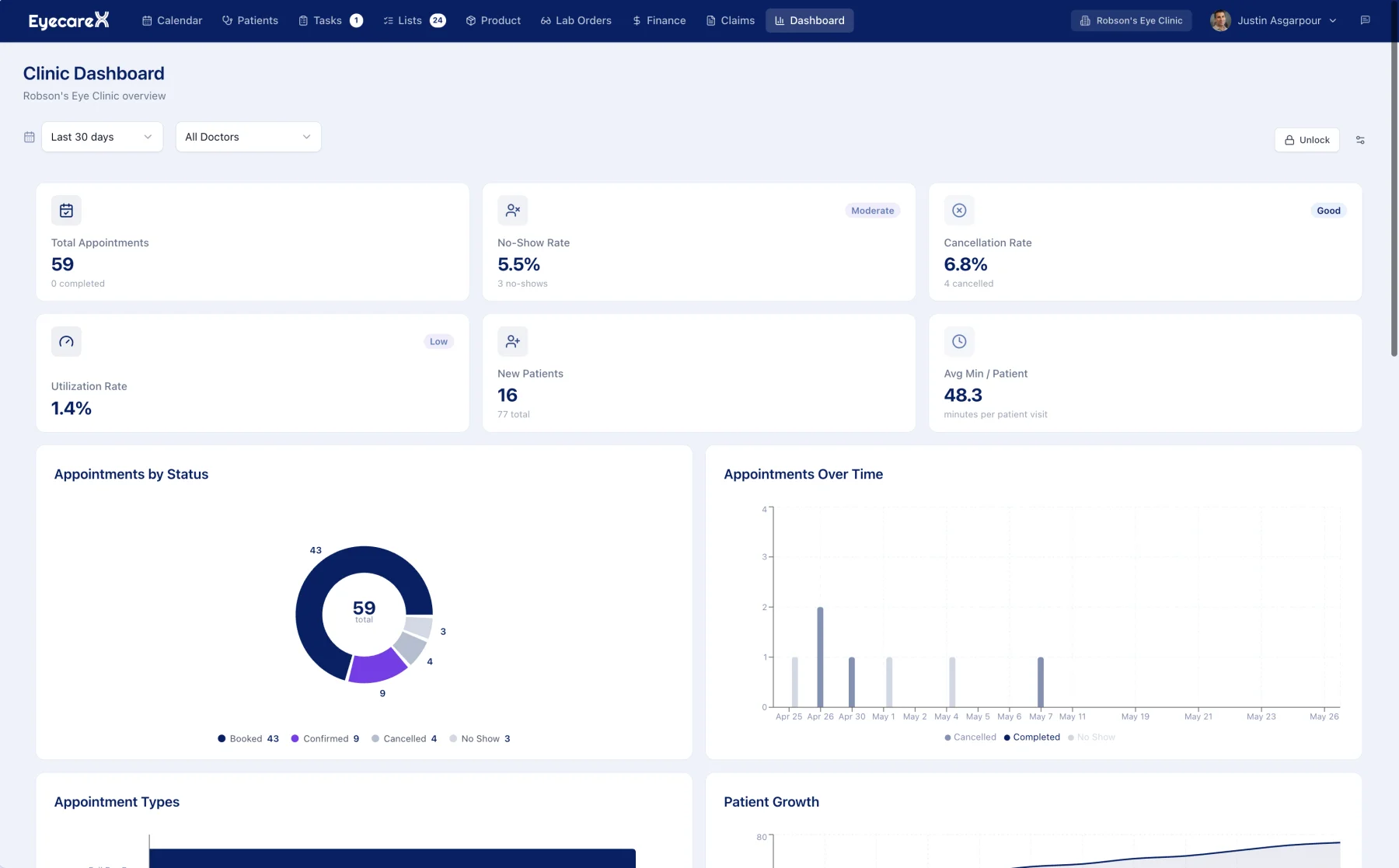
If you run an optometry clinic, you already have some version of a "system." Maybe it's a mix of a scheduler, a paper or electronic chart, a billing tool, and a spreadsheet for frames. Optometry practice management software brings those pieces into one platform, so the front desk, the exam lane, and the optical all work from the same record.
This guide covers what practice management software actually does, how it differs from a plain EMR, and what to look for if you're evaluating a system for your clinic.
Practice management software vs. EMR: what's the difference?
The terms get used interchangeably, but they describe different scopes:
- An EMR (electronic medical record) stores clinical data: exam findings, prescriptions, diagnoses, and notes. It replaces the paper chart.
- Practice management software runs the business around the chart: scheduling, recalls, billing and insurance claims, optical inventory, spectacle and contact lens orders, and reporting.
Most modern platforms, EyecareX included, combine both. A finalized exam flows straight into billing codes, an optical order, and a recall date without anyone re-typing data.
What a complete system handles
A full optometry practice management platform typically covers six areas:
- Scheduling: appointment types, provider calendars, online booking, and automated confirmations and reminders.
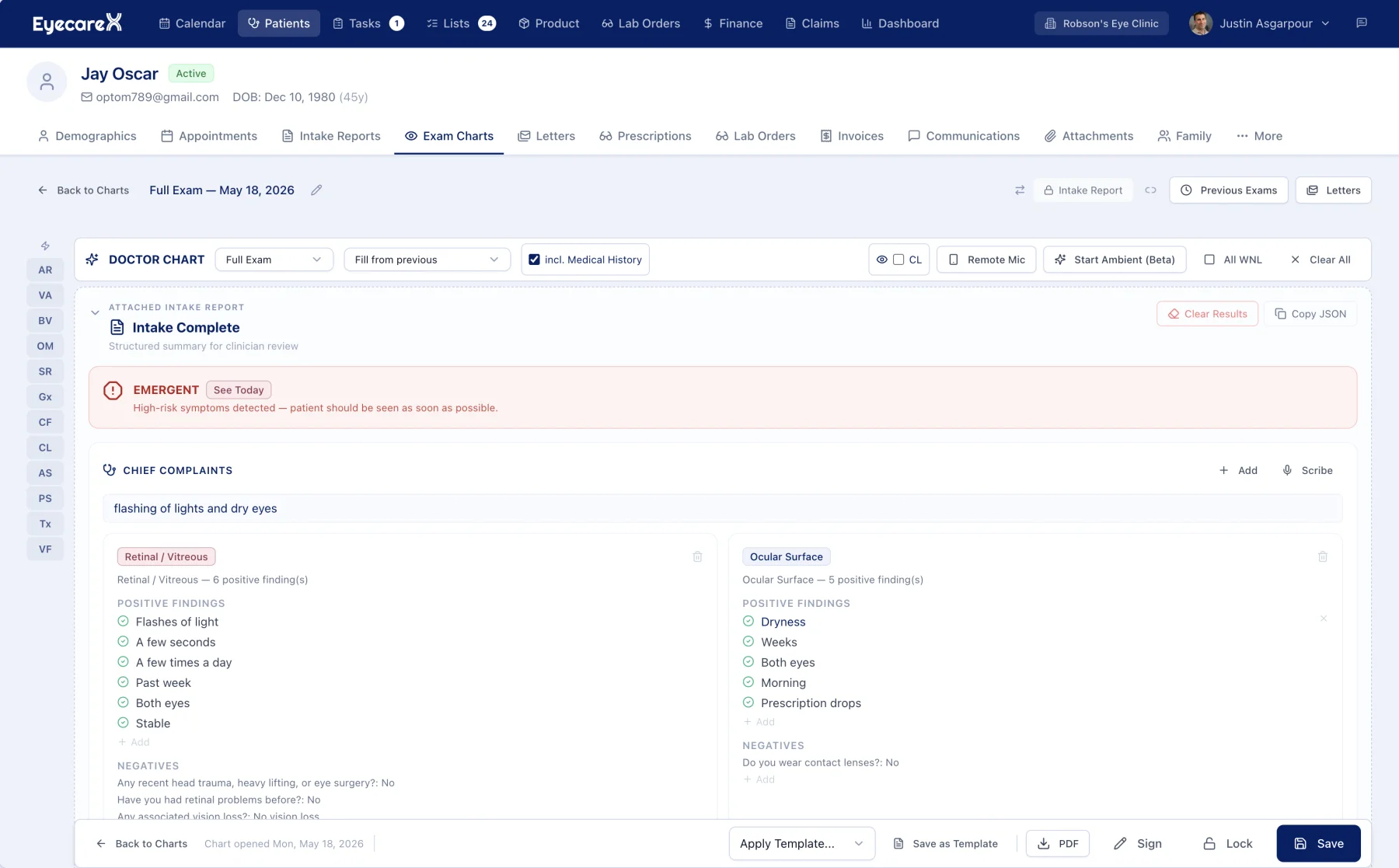
- Charting: exam documentation, prior-visit comparison, and letters or referrals. Newer systems add AI scribing that drafts the note from the conversation while you examine the patient.
- Billing and claims: provincial billing (MSP in BC, AHCIP in Alberta, OHIP in Ontario), private insurance, and patient invoicing.
- Recalls: automatically bringing patients back at the right interval, which for most clinics is the single biggest driver of predictable revenue.
- Optical: frame and lens inventory, spectacle and contact lens orders, and lab tracking.
- Patient portal: intake forms, pre-visit testing, appointment history, and secure messaging.
Where AI changes the equation
The newest generation of practice management software doesn't just store data. It does the work. In EyecareX, that looks like:
- Charting on autopilot. An AI scribe listens to the exam and drafts the note, letter, and billing codes for your review and sign-off.
- Recalls on autopilot. The system tracks who is due and reaches out on its own schedule, instead of a staff member working through a call list.
- Pre-visit testing. Patients complete visual acuity, color vision, and ocular motility screening on their own smartphone before they arrive, so lane time is spent on decisions rather than data collection.
The practical result is time: clinics running this model report saving hours of documentation and admin work per doctor per day.
What to look for when choosing a system
A few questions worth asking any vendor:
- Is it truly all-in-one, or will you still need separate billing, recall, and optical tools?
- Does it support your province's billing out of the box?
- Where is patient data stored? For Canadian clinics, look for data hosted in Canada with PIPEDA compliance.
- Can you migrate your existing records without data loss? That includes patients, appointment history, and charts.
- Do you stay in control of AI output? Every AI-generated note or code should require your review before it's saved or submitted.
The bottom line
Optometry practice management software is the difference between a clinic where the doctor is also the administrator, and a clinic where the systems run themselves. If your team spends evenings on charts, recalls happen "when someone has time," or your optical inventory lives in a spreadsheet, a modern platform will likely pay for itself quickly, both in hours saved and in recall revenue you're currently leaving on the table.
See EyecareX in action
Optometry practice management software that automates charting, recalls, billing, and pre-visit testing.
Book a Demo