Ask any practice consultant where an optometry clinic loses the most revenue and you'll get the same answer: patients who simply never come back. Not because they were unhappy. Because nobody reminded them.
A comprehensive eye exam is due every one to two years for most adults, and annually for kids, contact lens wearers, and patients with ocular disease. Every patient who drifts past their due date is a missed exam, a missed optical sale, and eventually a chart in someone else's filing system.
What a good recall rate looks like
Recall rate is the percentage of due patients who actually book their next exam. Most clinics that track it land somewhere between 30% and 50% when recalls are handled manually. Well-run automated systems push past 70%.
The gap is worth real money. For a clinic seeing 2,000 unique patients, moving recall from 40% to 65% means roughly 500 additional exams per year. At a conservative $250 of exam and optical revenue per visit, that is over $125,000 in annual revenue from patients you already have.
Why manual recalls fail
Manual recall systems fail for predictable reasons:
- They depend on slow time. Recall lists get worked "when the front desk has a minute," and the front desk never has a minute.
- One touch isn't enough. A single postcard or phone call converts poorly. Effective recall takes a sequence: an email, then a text, then a second nudge a few weeks later.
- The data goes stale. Phone numbers change, patients move, and nobody audits the list.
- Nobody owns it. When recall belongs to everyone, it belongs to no one.
What automation changes
A modern recall system watches every patient's due date and runs the sequence on its own:
- Timing is calculated per patient, based on their last exam and the recall interval you set for their age and condition.
- Outreach is multi-channel. Email and SMS sequences fire automatically, with online booking links so the patient can schedule at 9 pm on a Sunday.
- Non-responders get escalated, surfacing a short daily call list for staff instead of a 400-row spreadsheet.
- Everything is tracked. You see exactly how many due patients booked, and which message got them there.
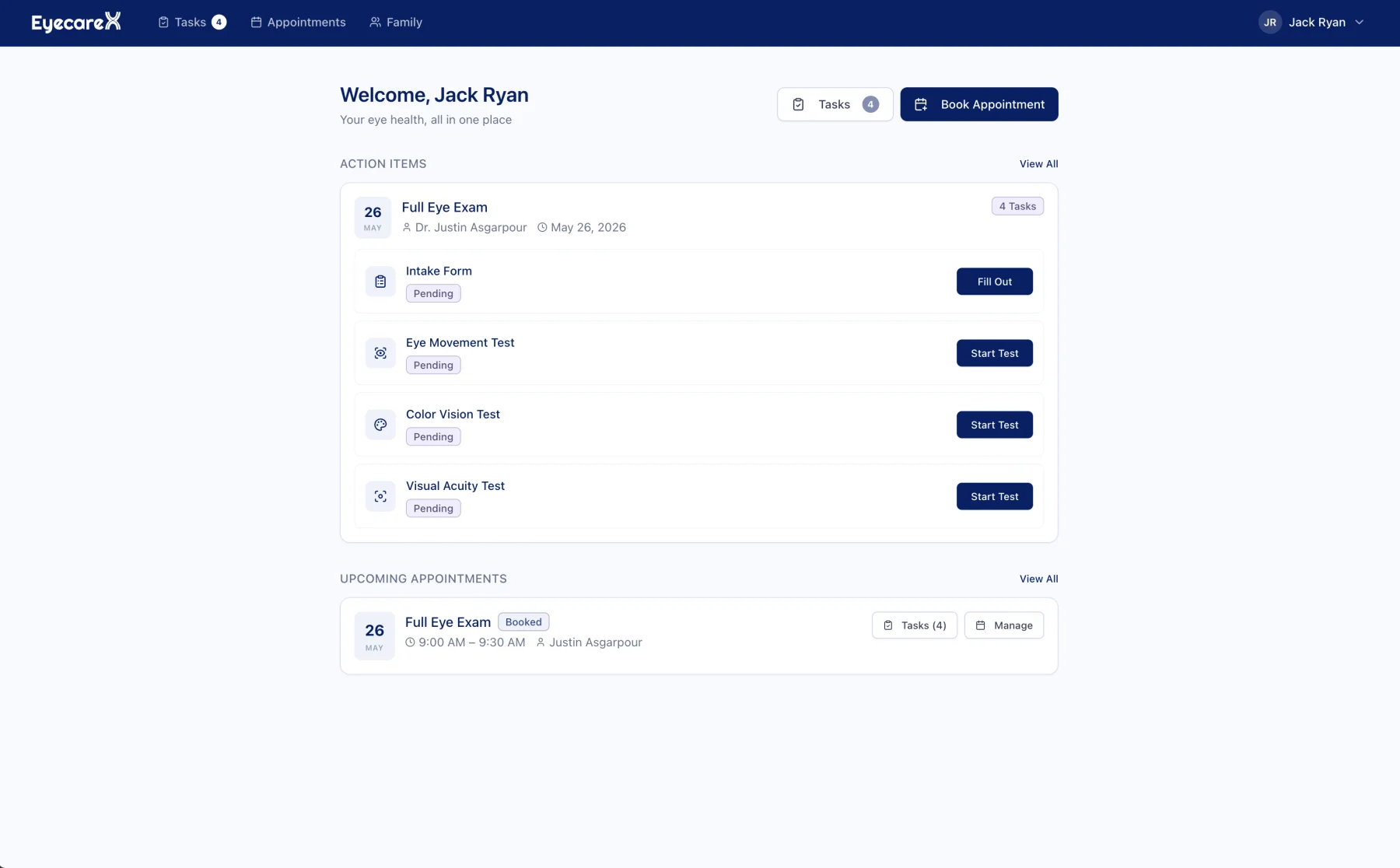
In EyecareX, recalls run on autopilot out of the box: the system reads exam data directly from the chart, so due dates are always current, and every booked recall lands on the schedule without staff touching it.
How to audit your own recall performance
You can benchmark your clinic this week:
- Pull the list of patients whose last exam was 13 to 24 months ago.
- Count how many have a future appointment booked.
- Divide. That is your effective recall rate.
If the number is under 50%, recall automation is likely the highest-return investment available to your practice, ahead of new equipment and ahead of new marketing. Acquiring a new patient costs many times more than bringing back one who already trusts you.
The bottom line
Recalls are not an admin chore. They are the compounding engine of a practice: every automated recall is revenue recovered from work you already did. Fix the recall system first, and the growth problems get easier.
See EyecareX in action
Optometry practice management software that automates charting, recalls, billing, and pre-visit testing.
Book a Demo